MICS and FICS Explained Professional Membership Grades of the Institute of Chartered Shipbrokers

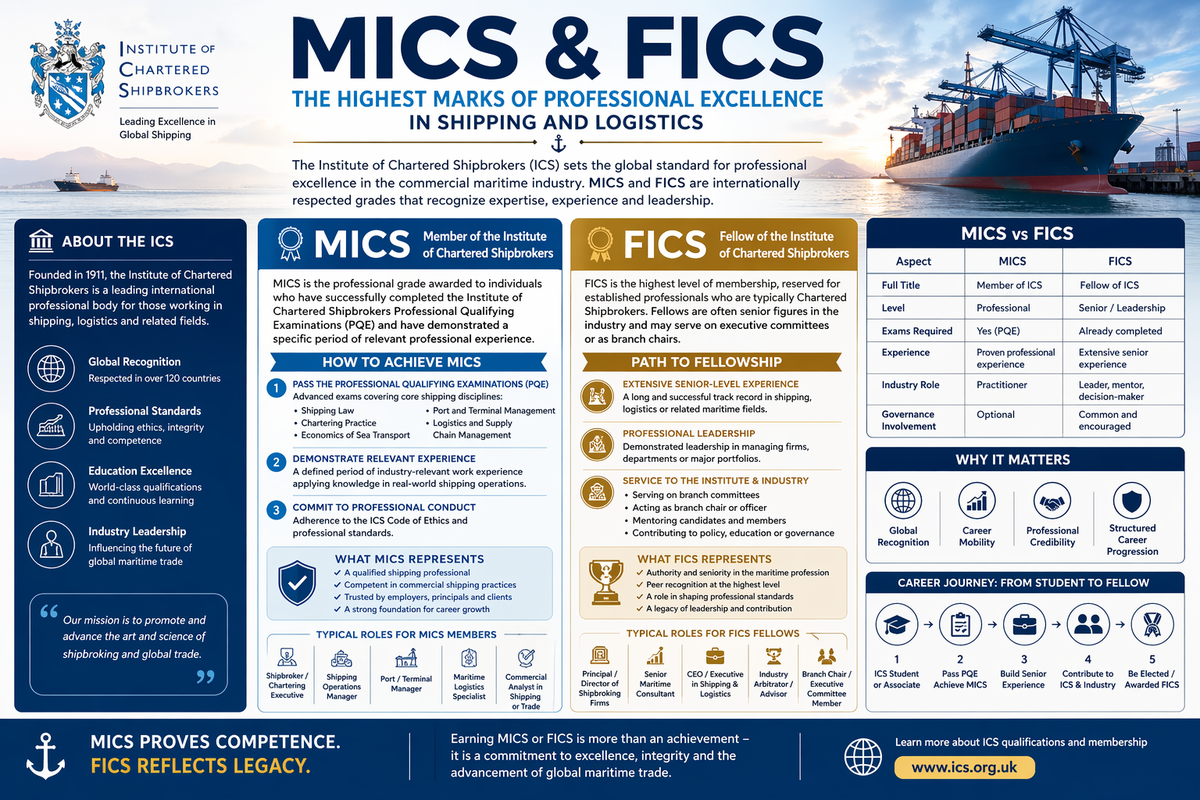
In the world of global shipping, where cargoes cross oceans and contracts hinge on precision, professional credibility is not optional. It is currency. Among the most respected markers of that credibility are MICS and FICS, two prestigious membership grades awarded by the Institute of Chartered Shipbrokers.
These post-nominals are not decorative letters. They are milestones on a long professional voyage, earned through rigorous examinations, proven experience, and sustained contribution to the maritime and logistics industry.
This article breaks down what MICS and FICS mean, how they are earned, and why they matter in today’s shipping ecosystem.
The Institute of Chartered Shipbrokers: A Brief Context
Founded in 1911 and headquartered in London, the Institute of Chartered Shipbrokers (ICS) is an internationally recognized professional body serving the commercial maritime industry. Its mandate is clear:
- Set professional standards
- Deliver globally respected education
- Uphold ethics and competence in shipping, logistics, and maritime trade
ICS qualifications and memberships are recognized across shipbroking, chartering, maritime law, port management, logistics, and supply chain operations.
Within this framework sit the two advanced professional grades: MICS and FICS.
What Is MICS?
Member of the Institute of Chartered Shipbrokers
MICS is a professional-grade membership awarded to individuals who have demonstrated both academic mastery and practical competence in the shipping industry.
How MICS Is Earned
To qualify for MICS, a candidate must:
- Pass the Professional Qualifying Examinations (PQE)
These are advanced examinations covering core shipping disciplines such as:- Shipping Law
- Chartering Practice
- Economics of Sea Transport
- Port and Terminal Management
- Logistics and Supply Chain Management
- Demonstrate Relevant Professional Experience
Academic success alone is not enough. Candidates must show a defined period of industry-relevant work experience, ensuring they can apply theory to real-world shipping operations. - Commit to Professional Conduct
Members are bound by the Institute’s code of ethics and professional standards.
What MICS Represents
Holding MICS signals that you are:
- A qualified shipping professional, not just academically trained
- Competent in commercial shipping practices
- Trusted by employers, principals, and clients
For many professionals, MICS marks the transition from learner to recognized practitioner.
Typical Roles Held by MICS Members
- Shipbroker or Chartering Executive
- Shipping Operations Manager
- Port or Terminal Manager
- Maritime Logistics Specialist
- Commercial Analyst in Shipping or Trade
Think of MICS as a captain’s license for the commercial side of shipping. You know the charts, and you have sailed the waters.
What Is FICS?
Fellow of the Institute of Chartered Shipbrokers
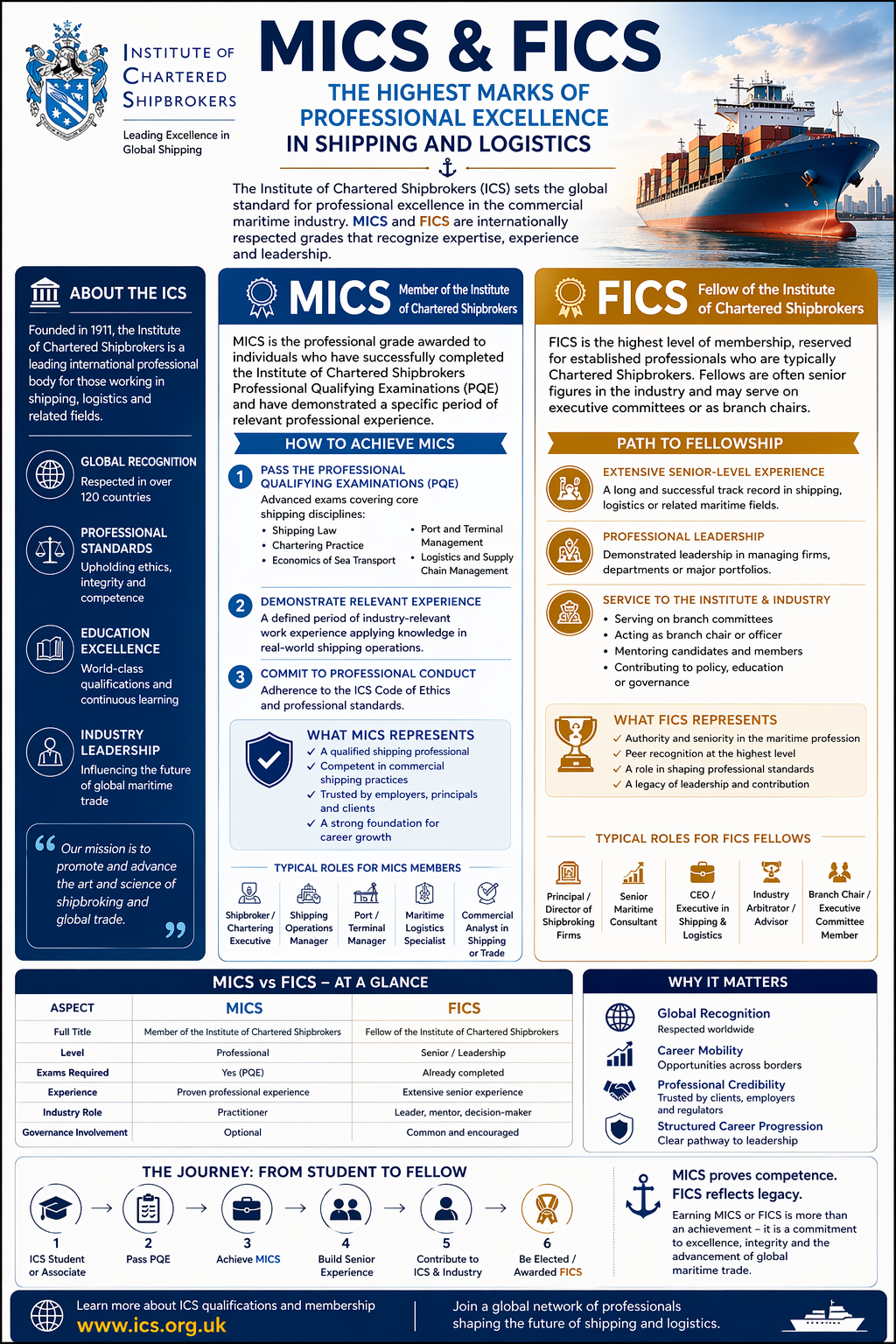
FICS is the highest level of membership within the Institute. It is not applied for lightly, nor awarded quickly. Fellowship recognizes individuals who have not only mastered the profession but have shaped it.
Who Qualifies for FICS?
FICS is typically reserved for:
- Established Chartered Shipbrokers
- Senior professionals with long-standing industry experience
- Leaders who have contributed significantly to shipping, logistics, or maritime trade
Most Fellows already hold MICS and have built a substantial professional record beyond it.
Key Requirements for FICS
While specific pathways may vary, Fellowship generally requires:
- Extensive senior-level experience in shipping or a related maritime field
- Professional leadership, such as managing firms, departments, or major portfolios
- Service to the Institute or industry, including:
- Serving on branch committees
- Acting as branch chair or officer
- Mentoring candidates and members
- Contributing to policy, education, or governance
What FICS Represents
FICS signals:
- Authority and seniority in the maritime profession
- Peer recognition at the highest level
- A role in shaping professional standards and future generations
Fellows are often the voices consulted when policy is debated, standards are revised, or industries pivot.
Typical Roles Held by FICS Members
- Principal or Director of Shipbroking Firms
- Senior Maritime Consultants
- CEOs or Executives in Shipping and Logistics Companies
- Industry Arbitrators and Advisors
- Branch Chairs and Executive Committee Members
If MICS proves competence, FICS reflects legacy.
MICS vs FICS: A Clear Comparison
| Aspect | MICS | FICS |
|---|---|---|
| Full Title | Member of ICS | Fellow of ICS |
| Level | Professional | Senior / Leadership |
| Exams Required | Yes (PQE) | Already completed |
| Experience | Proven professional experience | Extensive senior experience |
| Industry Role | Practitioner | Leader, mentor, decision-maker |
| Governance Involvement | Optional | Common and encouraged |
Why MICS and FICS Matter Globally
In an industry where deals span continents and disputes can cost millions, trust matters. MICS and FICS provide:
- Global recognition across shipping hubs
- Career mobility beyond borders
- Professional credibility with clients, regulators, and employers
- Structured career progression in maritime professions
They also differentiate professionals in a crowded industry where experience alone is often hard to verify.
Career Pathway: From Student to Fellow
Many professionals follow a natural progression:
- ICS Student or Associate
- Pass PQE → Achieve MICS
- Build senior experience and industry impact
- Contribute to ICS and the profession
- Be elected or awarded FICS
It is a long voyage, but one with clear navigation markers.
======
MICS and FICS are not just memberships. They are signals of trust, earned through discipline, experience, and service.
- MICS tells the industry: “I am qualified, tested, and professionally competent.”
- FICS tells it: “I have led, contributed, and helped shape this profession.”
In shipping, where reputation travels faster than vessels, these post-nominals speak before you do ⚓📜