Fuel Crisis in Africa 2026: Kenya’s EPRA Price Shock and What It Means

Introduction
Africa is once again facing a severe fuel crisis, driven by global geopolitical tensions, supply chain disruptions, and rising crude oil prices. Countries heavily dependent on fuel imports—especially in East Africa—are experiencing the sharpest impact. Kenya, a key economic hub in the region, is now at the center of this crisis following the latest fuel price adjustments by the Energy and Petroleum Regulatory Authority (EPRA).
The African Fuel Crisis: A Growing Emergency
The current fuel crisis across Africa is largely linked to global oil market instability. A major trigger is the ongoing conflict in the Middle East, particularly disruptions around the Strait of Hormuz—a critical global oil transit route.
- Over 20% of global oil supply flows through this route
- Shipping delays and rising insurance costs have pushed crude prices above $100 per barrel (The Citizen)
- African countries relying on imports are facing supply shortages and rising costs
In countries like Kenya, Ghana, and Ethiopia, fuel scarcity fears have led to:
- Panic buying
- Hoarding by retailers
- Reduced availability at petrol stations (Reuters)
This situation highlights a structural vulnerability: Africa imports most of its refined petroleum despite having crude oil reserves.
Kenya’s Fuel Crisis: Supply Shock Meets Policy Pressure
Kenya imports nearly 100% of its petroleum products, mainly from Middle Eastern suppliers. This dependency has exposed the country to global shocks.
Recent developments show:
- Fuel import costs surged by up to 68.7% (Reuters)
- Shipping and logistics costs increased significantly
- The government had temporarily held prices steady—but the pressure became unsustainable
As a result, the crisis transitioned from a supply issue to a pricing shock.
Latest EPRA Fuel Prices (April 2026 Update)
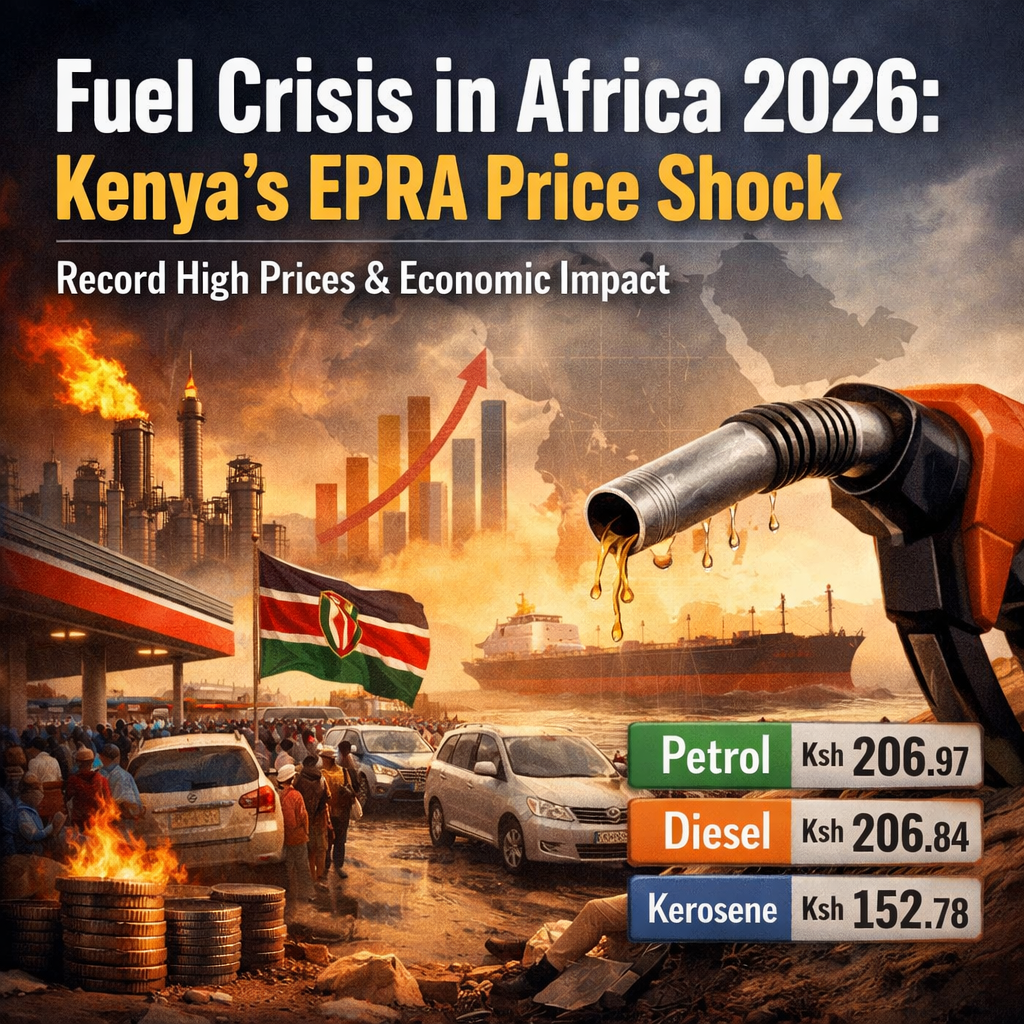
According to the latest EPRA review (effective April 15, 2026), fuel prices in Kenya have hit record highs:
- Petrol (Super): KSh 206.97 per litre
- Diesel: KSh 206.84 per litre
- Kerosene: KSh 152.78 per litre (Reuters)
Regional Snapshot (EPRA Index)
Key Adjustments
- Petrol increased by KSh 28.69 per litre
- Diesel increased by KSh 40.30 per litre
- VAT reduced from 16% to 13% to cushion consumers (The Citizen)
Despite subsidies, prices remain historically high due to global market pressure.
Economic Impact on Kenya and Africa
1. Rising Cost of Living
Fuel affects transport, food distribution, and electricity generation. The ripple effect includes:
- Higher food prices
- Increased transport fares
- Expensive manufacturing and logistics
2. Inflation Pressure
Kenya’s inflation has already started rising, with energy costs being a key driver (The Citizen)
3. Business and SME Strain
Small businesses face shrinking margins due to:
- Higher fuel and delivery costs
- Reduced consumer spending power
4. Monetary Policy Impact
The Central Bank of Kenya has paused interest rate cuts to manage inflation risks linked to rising fuel prices (Reuters)
Why Africa Is More Vulnerable
Africa’s fuel crisis is not just about global oil prices—it is structural:
- Heavy reliance on fuel imports
- Limited refining capacity
- Weak strategic reserves
- Currency depreciation against the US dollar
This makes African economies more sensitive to external shocks compared to oil-producing regions.
Government Interventions and Mitigation Measures
Kenya has introduced several short-term measures:
- VAT reduction (16% → 13%)
- Fuel subsidies (especially on kerosene and diesel)
- Government-to-government fuel import deals
However, these measures:
- Provide temporary relief only
- Increase fiscal pressure on government budgets
What to Expect Next
If global tensions persist:
- Fuel prices may remain high or increase further
- Supply disruptions could worsen
- Inflation may continue rising across Africa
Long-term solutions will require:
- Investment in local refining capacity
- Transition to renewable energy
- Diversification of fuel import sources
Keynote
The 2026 fuel crisis underscores Africa’s vulnerability to global energy shocks. Kenya’s latest EPRA price adjustments are not just a domestic issue—they reflect a broader continental challenge.
For businesses, policymakers, and consumers, the focus must now shift from short-term survival to long-term energy resilience.