Why High Clicks Don’t Mean High Revenue
Understanding Google AdSense Performance in Kenya (CPM, CPC, CTR & RPM)

Why High Clicks Don’t Mean High Revenue:
Understanding Google AdSense Performance in Kenya (CPM, CPC, CTR & RPM)
Introduction
Many African publishers—especially in Kenya—experience the same frustration: thousands of ad clicks but very little income. A common assumption is that more clicks should automatically lead to higher earnings. In practice, this is not how Google AdSense works, particularly in low-to-mid advertiser markets like Kenya.
This article explains why Kenyan traffic behaves differently, how AdSense metrics actually function, and how publishers using Ghost and Discourse can restructure content to earn more—without increasing traffic or violating policies.
1. The Reality of Google AdSense in Kenya
Google AdSense operates on an auction system where advertisers bid to show ads to users. In Kenya and much of Sub-Saharan Africa:
- Advertiser competition is lower than in Tier-1 markets
- Mobile traffic dominates (80%+)
- Many users are task-oriented, not purchase-oriented
- Local advertisers bid conservatively
As a result, click value (CPC) is often low, even when click volume is high.
2. Understanding the Core Metrics (In Simple Terms)
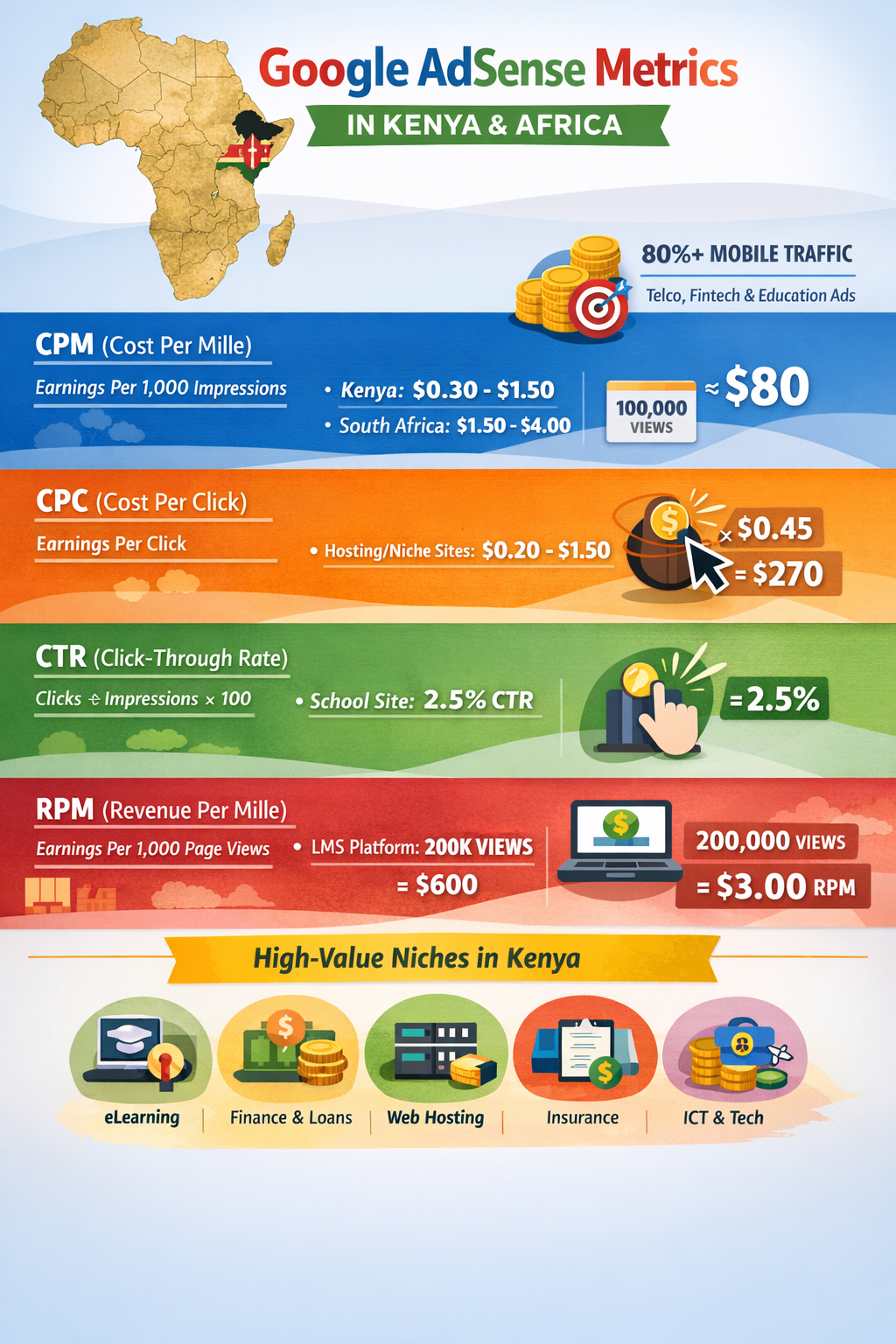
CPM (Cost Per Mille)
What advertisers pay per 1,000 impressions.
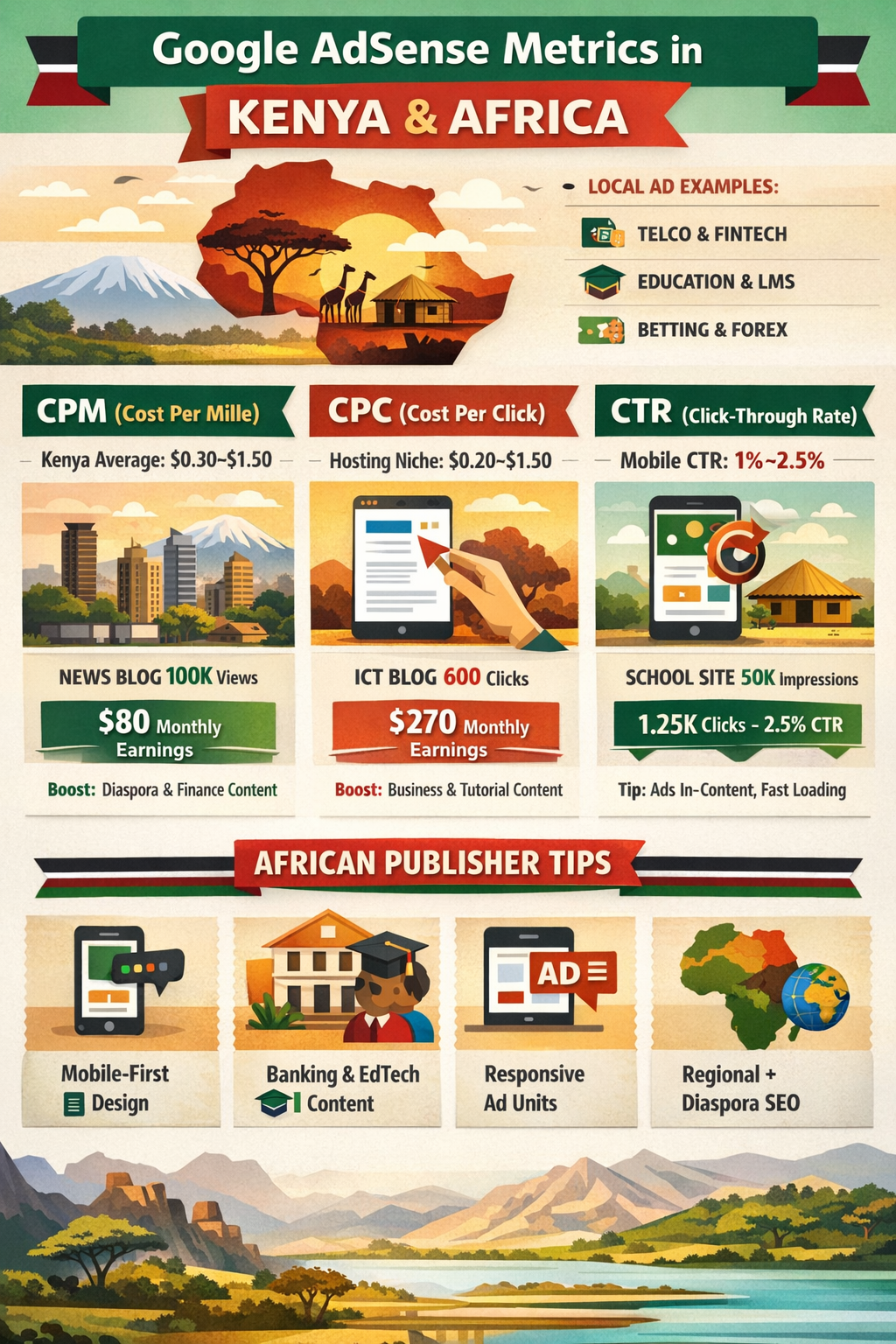
Kenya average:
€0.30 – €1.50
Best for:
- High traffic sites
- Brand awareness content
Limitation:
- Requires massive page views to generate meaningful income
CPC (Cost Per Click)
What you earn per valid ad click.
Kenya averages by content type:
- Cybercafé / help queries: €0.005 – €0.02
- General tech content: €0.03 – €0.08
- Tech education / LMS: €0.10 – €0.40
- Hosting / SaaS / finance: €0.30 – €1.50
A site earning €20 from 2,000 clicks has a CPC of ~€0.01—normal for low-intent local traffic, but not sustainable.
CTR (Click-Through Rate)
The percentage of users who click ads.
In Kenya:
- Mobile CTR: 1% – 2.5%
- Education sites often perform better
Important note:
A high CTR with low CPC does not equal high revenue.
RPM (Revenue Per Mille) – The Most Important Metric
RPM shows how much you earn per 1,000 page views.
Formula:
RPM = (Earnings ÷ Page Views) × 1,000
Typical Kenyan RPM:
- General content: €0.50 – €2.00
- Tech education: €1.50 – €4.00
- Hosting / business tech: €3.00 – €8.00+
RPM—not clicks—is the true measure of success.
3. Why Cybercafé & Local Help Content Pays Poorly
Cybercafé-style queries dominate many Kenyan sites:
Examples:
- KRA PIN help
- Printing documents
- Government portal issues
- Login problems
These users:
- Want immediate help, not products
- Rarely convert for advertisers
- Trigger low-bid local ads
Even if they click ads, advertisers value these clicks very little.
More cybercafé traffic = lower average CPC site-wide.
4. The Discourse + Ghost Advantage (If Used Correctly)
Migrating to Discourse and Ghost is a strategic advantage—but only when roles are clearly separated.
Discourse: Community & Support Platform
Purpose:
- Questions
- Cybercafé queries
- Discussions
- Peer help
Monetization reality:
- AdSense performs poorly here in Kenya
- CPC is extremely low
- Auto Ads reduce UX
Best use:
- Minimal or no AdSense
- Promote:
- Your services
- LMS courses
- Ghost articles
- WhatsApp / ticket support
Discourse should feed traffic, not earn ad revenue.
Ghost: Content & Revenue Platform
Purpose:
- Long-form articles
- Tech education
- Business & professional content
- SEO-driven traffic
Monetization:
- Google AdSense (primary)
- High-value CPC niches
- Lead generation
Ghost should generate most of your AdSense income.
5. Content That Pays in the Kenyan Market
Low-Paying Content (Limit or Isolate)
- Generic computer basics
- Cybercafé how-to guides
- Government service help
High-Paying Content (Prioritize)
- LMS platforms and eLearning
- ICT certifications and training
- Hosting and cloud infrastructure
- Business technology adoption
- Software comparisons and reviews
Advertisers bidding on this content are often:
- International
- SaaS-based
- High lifetime value focused
6. Why Separating Content Increases CPC
When low-intent and high-intent content are mixed:
- Google learns your audience is low value
- CPC drops across the entire site
When separated:
- High-intent pages recover CPC
- RPM increases without traffic growth
This improvement typically appears within 30–45 days.
7. A Realistic Improvement Scenario
Before
- 2,000 clicks → €20
- CPC ≈ €0.01
After Proper Separation
- Discourse:
- 1,200 clicks → €10 (ignored)
- Ghost:
- 800 clicks → €120–€250
Same ecosystem. Same country. Different intent handling.
8. Key Takeaways for Kenyan Publishers
- Click volume does not equal revenue
- Cybercafé traffic should not be monetized with AdSense
- RPM is more important than CTR
- Ghost should host high-value content
- Discourse should build community and redirect intent
In low-CPM markets, strategy beats scale.

Sum up
Earning well with Google AdSense in Kenya is possible—but only when publishers stop treating all traffic as equal. By separating community support from monetized education and business content, and by focusing on advertiser intent rather than clicks, publishers can turn modest traffic into sustainable revenue.
Your €20 from 2,000 clicks is not failure—it is misaligned monetization. Once corrected, the same traffic can earn several times more.